Why Flat Roofs Need the Right System Not Shingles
Flat roof sections on a home get mishandled all the time. A contractor who primarily does pitched roofs will sometimes just throw shingles on a flat section and call it a day. That might look fine for a season. But water doesn't drain off a flat surface the same way it does on a slope - and shingles are not designed to handle that. The result is pooling, seeping, and eventually a leak that works its way inside.
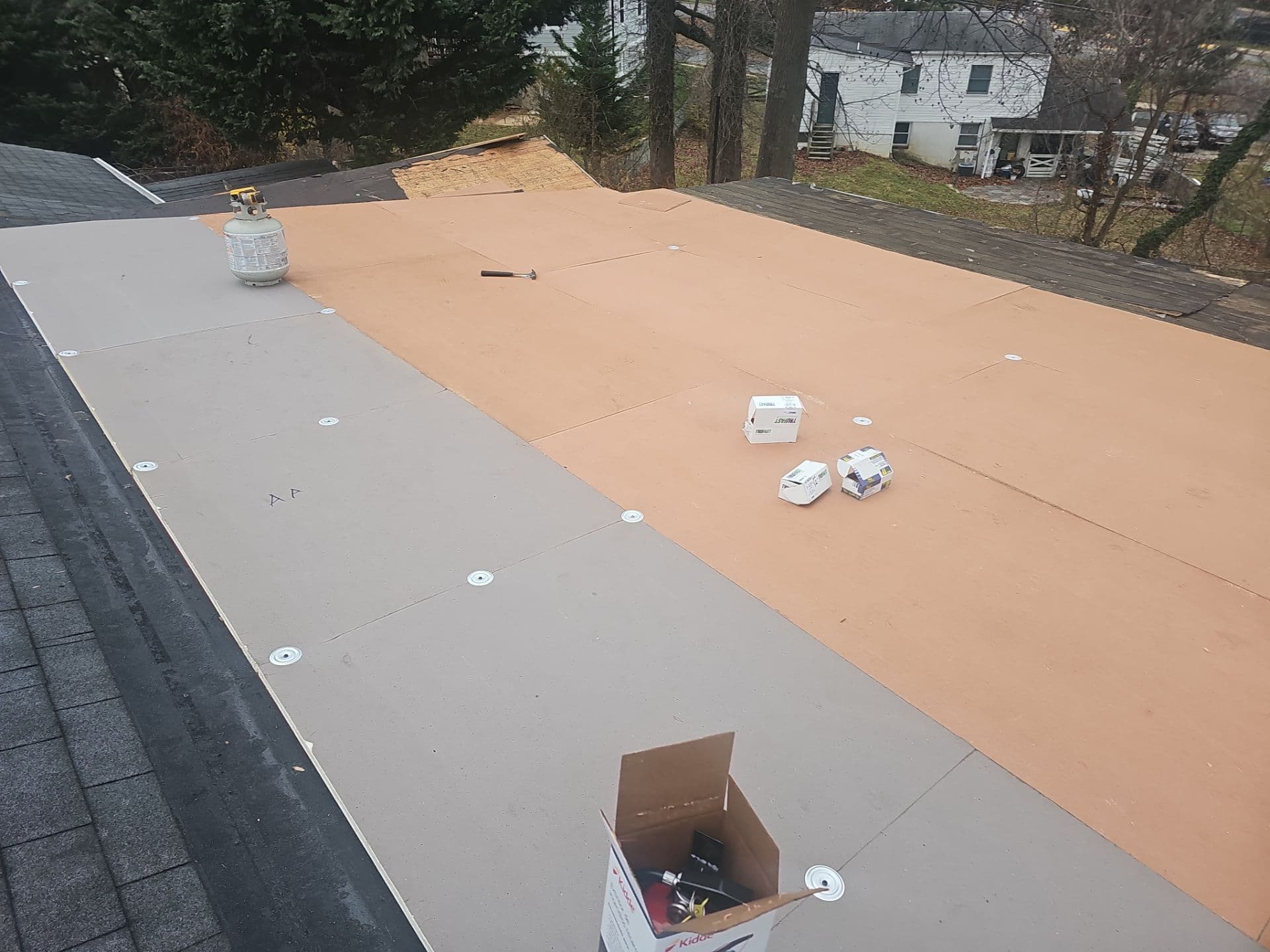
Here's what we did instead. We started with a proper insulation board base, mechanically fastened and laid tight across the entire surface. That gives the membrane something solid and thermally efficient to bond to. No shortcuts, no skipped steps. The substrate has to be right before anything else goes on top.
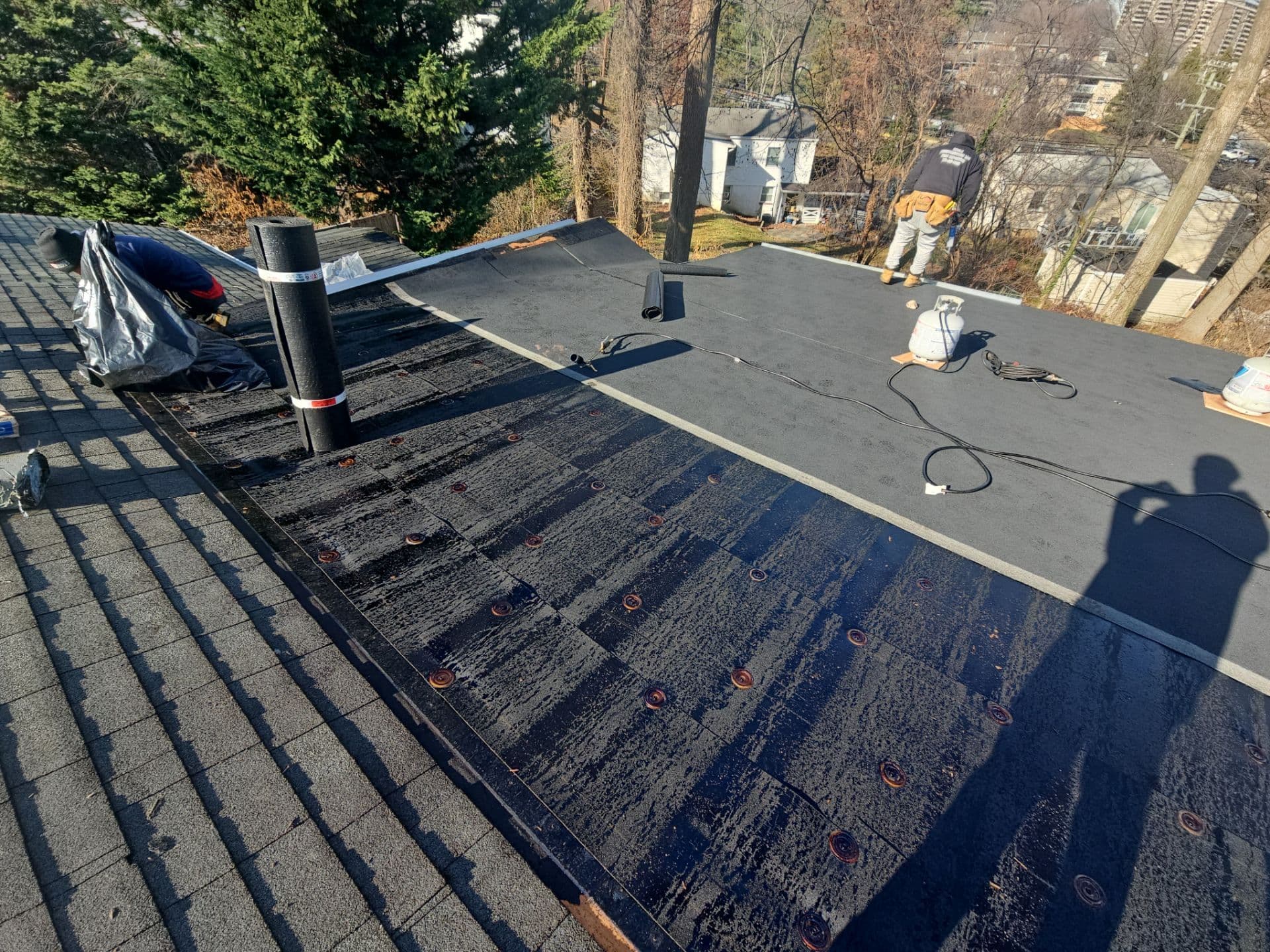
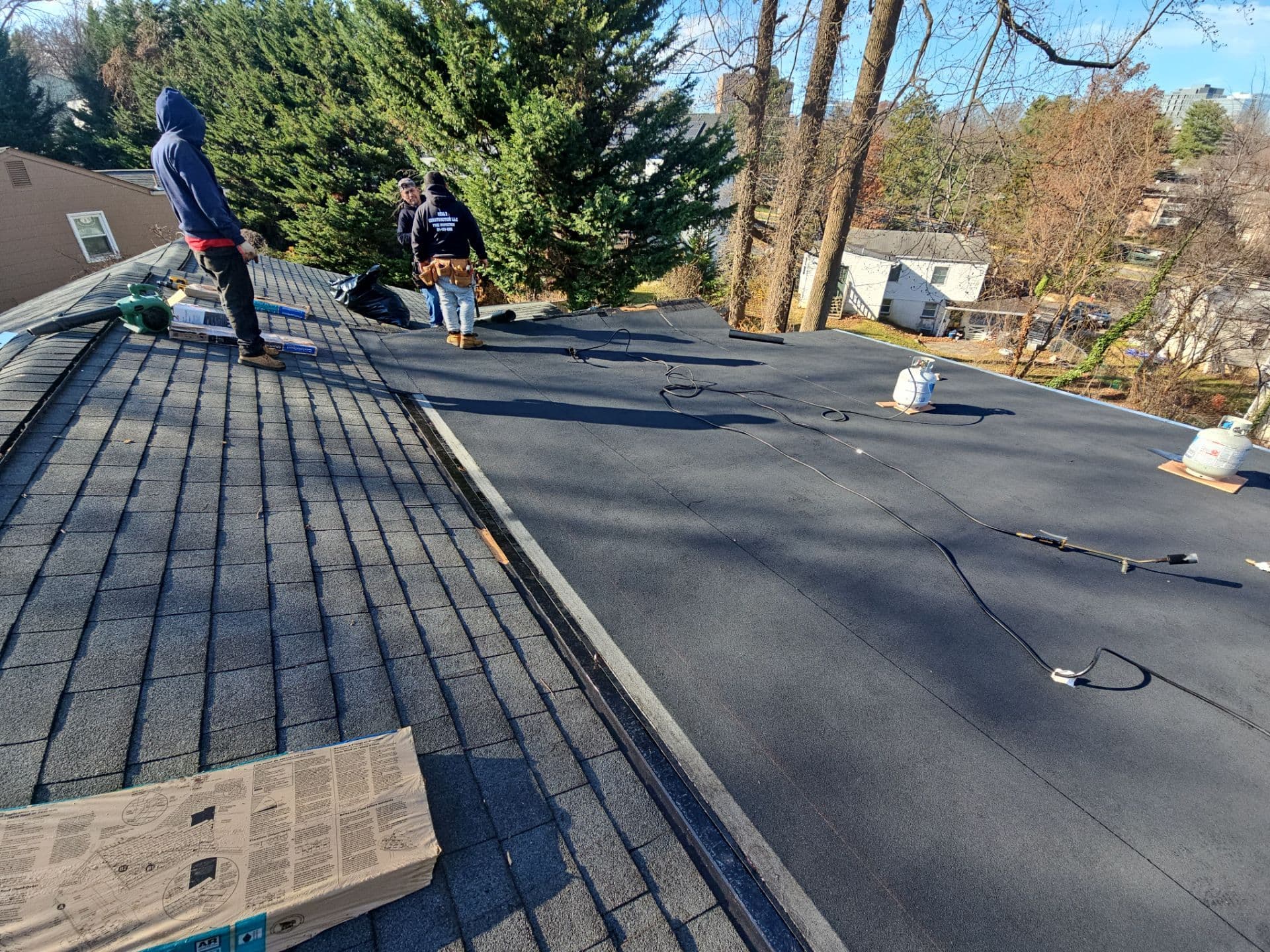
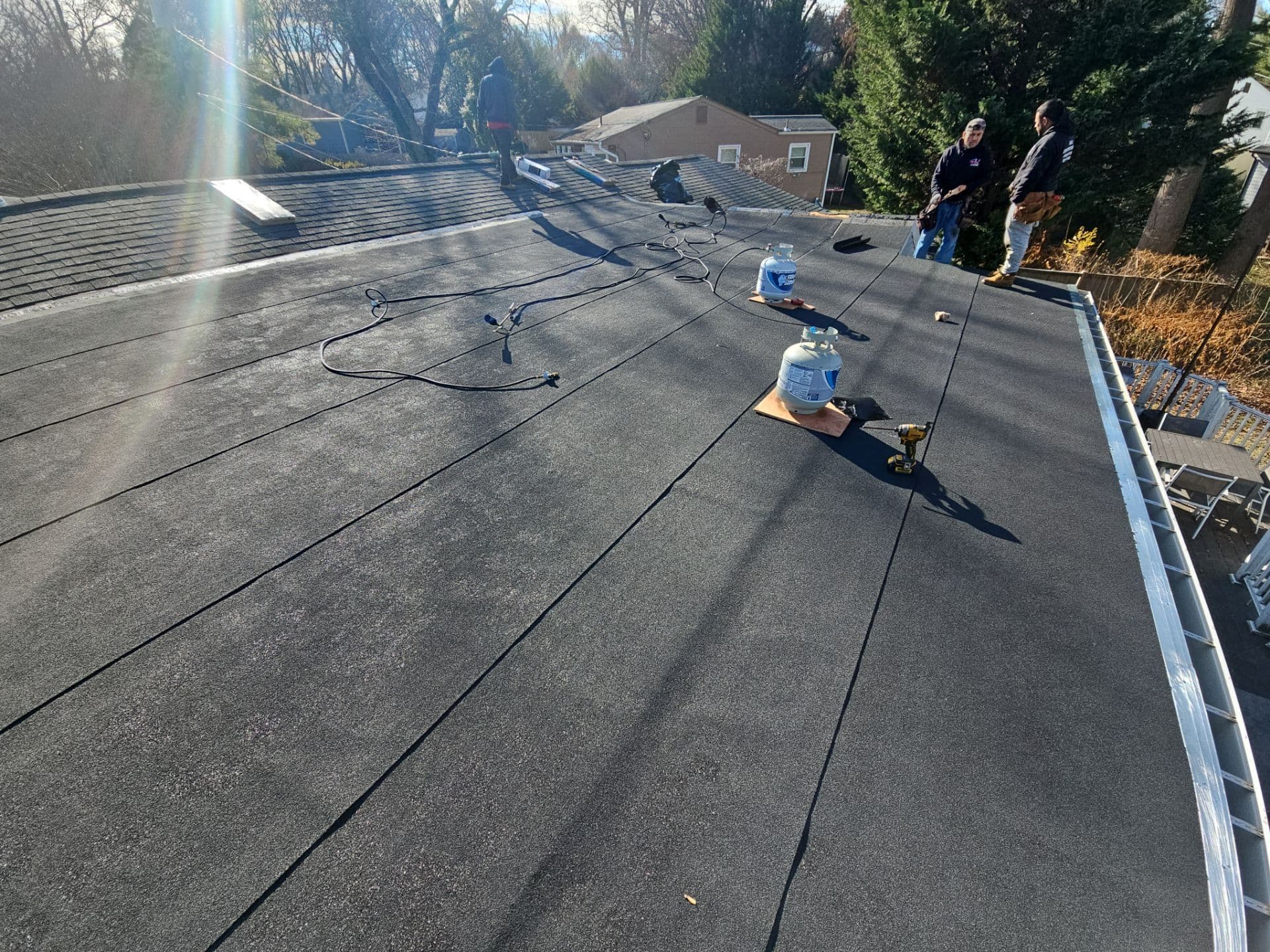
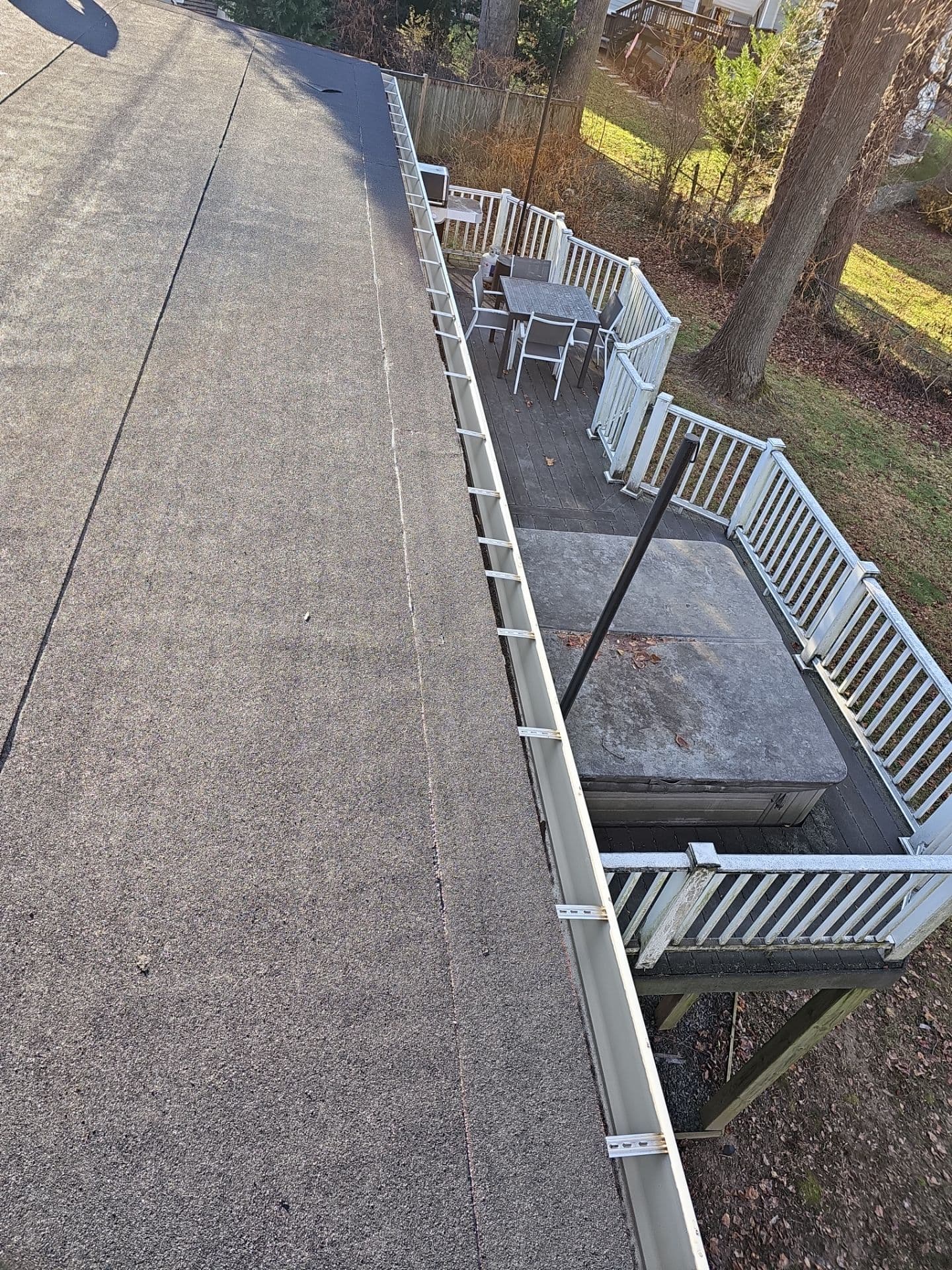
From there, we installed a torch-down modified bitumen membrane - a system that's actually built for flat and low-slope applications. Modified bitumen is tough, flexible, and heat-welded directly to the surface, which creates a continuous waterproof layer with no gaps or seams that can open up over time. The clean, granulated finish you see across the completed surface isn't just for looks - it adds UV protection and durability that keeps the system performing for years.
The edge termination matters just as much as the field membrane. We ran aluminum drip edge along the perimeter so water has a clean path off the roof and away from the fascia. That detail alone prevents a lot of rot and water intrusion that builds up quietly over time. Every piece of this installation was done with the right material for the right purpose.
Flat roof replacement and flat roof repair are specialties on their own. The system we use here is not what every roofer carries or knows how to install correctly. If you've got a flat section on your home and someone has been pushing shingles as the solution, that's a red flag worth paying attention to.