Wind Damage on a Tall Home - What Most People Miss
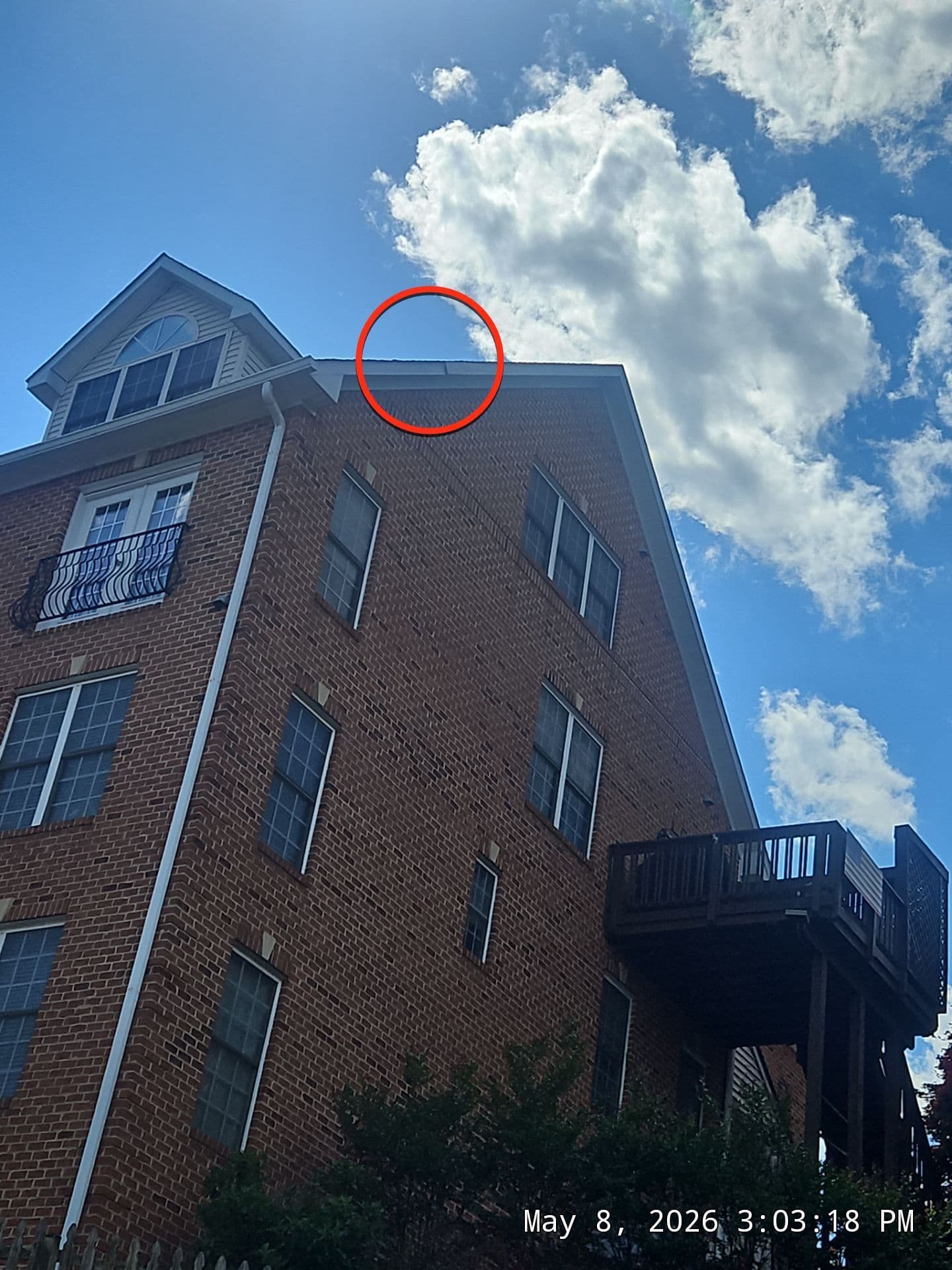
Wind hits harder the higher up you go. That's just physics. On a multi-story home like this, the roofline is fully exposed to gusts that lower structures barely feel. And the problem with that? The damage tends to show up in spots most homeowners never think to check.
That circled area near the upper roofline is exactly what we're talking about. It's the kind of thing you'd never notice from ground level on your own. No ladder, no trained eye, no way to know it's there. But left alone, that small issue becomes a leak, and a leak becomes a much bigger repair bill.
Here's the thing about wind damage - it doesn't always look dramatic. Sometimes shingles lift just enough to break the seal. Sometimes flashing gets pushed out of place by a single strong gust. It's subtle. But subtle damage on a tall roofline, sitting through rain after rain, is how interior water damage starts.
That's exactly why we do thorough roof inspections after any significant wind event. We get up there, we document what we find, and we give homeowners a clear picture of what's going on. No guesswork. No vague answers. Just honest findings and straightforward options for roof repair if it's needed.
Taller homes need more attention after storms, not less. If your home has taken on some wind and you haven't had eyes on the roof yet, that's the first step worth taking.